Germany, a global powerhouse in engineering and manufacturing, is rapidly embracing advanced technologies to maintain its competitive edge. Among these, 3D scanning services in Germany are proving indispensable, revolutionizing product development, quality control, and reverse engineering across numerous industries. As of 2026, the demand for precise digital replicas of physical objects is soaring, driven by the need for greater efficiency, innovation, and customization. This comprehensive guide explores the landscape of 3D scanning services available in Germany, detailing their applications, benefits, and how businesses can leverage them for success.
What is 3D Scanning and Why is it Crucial for German Industries?
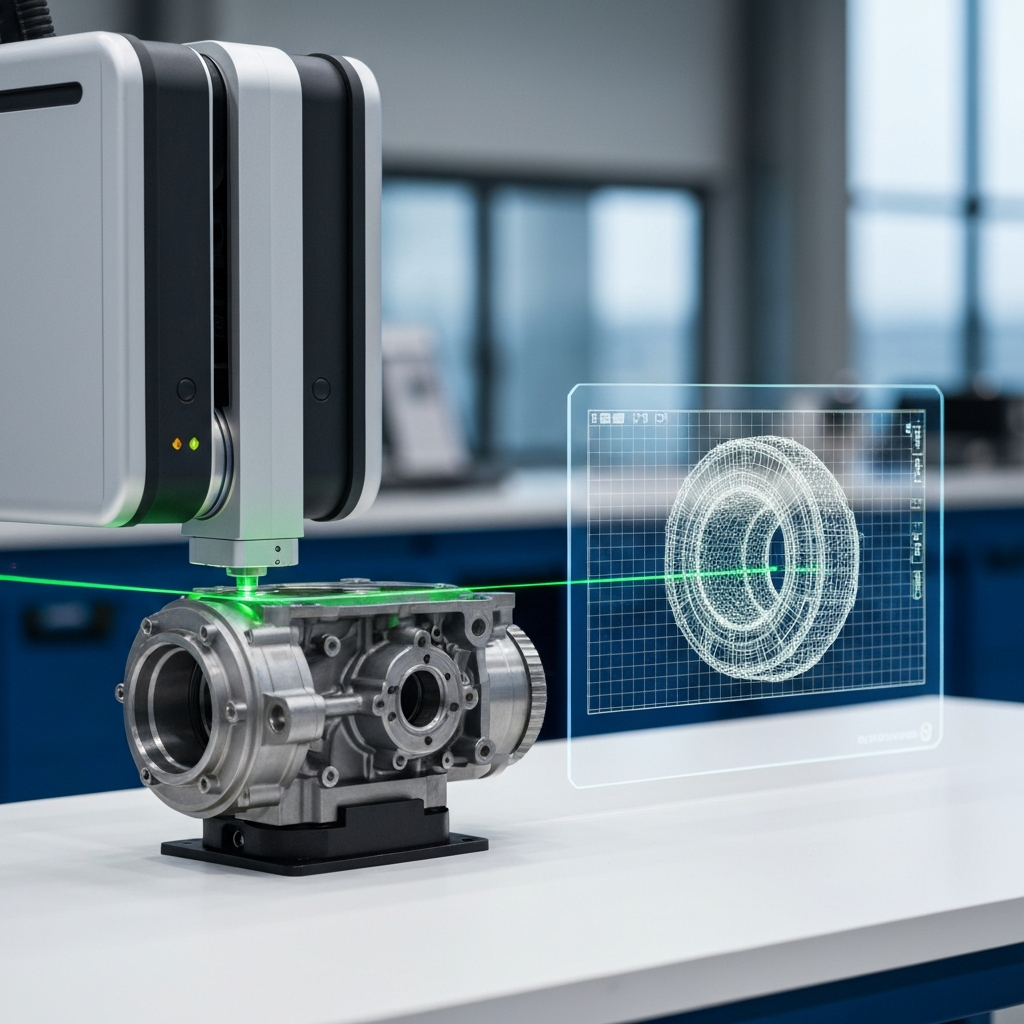
3D scanning is a process that analyzes a real-world object or environment to collect data on its shape and appearance. This data is then used to construct a digital, three-dimensional model. Unlike traditional measurement methods, 3D scanning captures millions of data points, creating highly accurate and detailed digital twins. These digital models are crucial for German industries, which are known for their precision engineering and high-quality manufacturing standards.
The German industrial sector, encompassing automotive, aerospace, machinery, medical technology, and consumer goods, thrives on innovation and meticulous quality. 3D scanning directly supports these pillars by:
- Accelerating Product Development: Quickly creating digital prototypes allows for faster iteration and testing.
- Enhancing Quality Control: Comparing scanned data against CAD models identifies deviations and defects with unparalleled accuracy.
- Facilitating Reverse Engineering: Recreating existing parts or systems for which original design data is lost or unavailable.
- Enabling Digital Archiving: Preserving the digital state of components or artifacts for future reference or replication.
- Supporting Customization: Generating precise models for bespoke manufacturing and personalized products.
With Germany’s strong manufacturing base, the integration of 3D scanning is not just an upgrade but a strategic imperative for companies aiming to stay ahead in the global market. The 2026 market shows a significant increase in adoption, with studies indicating over 70% of German manufacturing firms utilizing some form of 3D scanning technology.
Key Applications of 3D Scanning Services in Germany
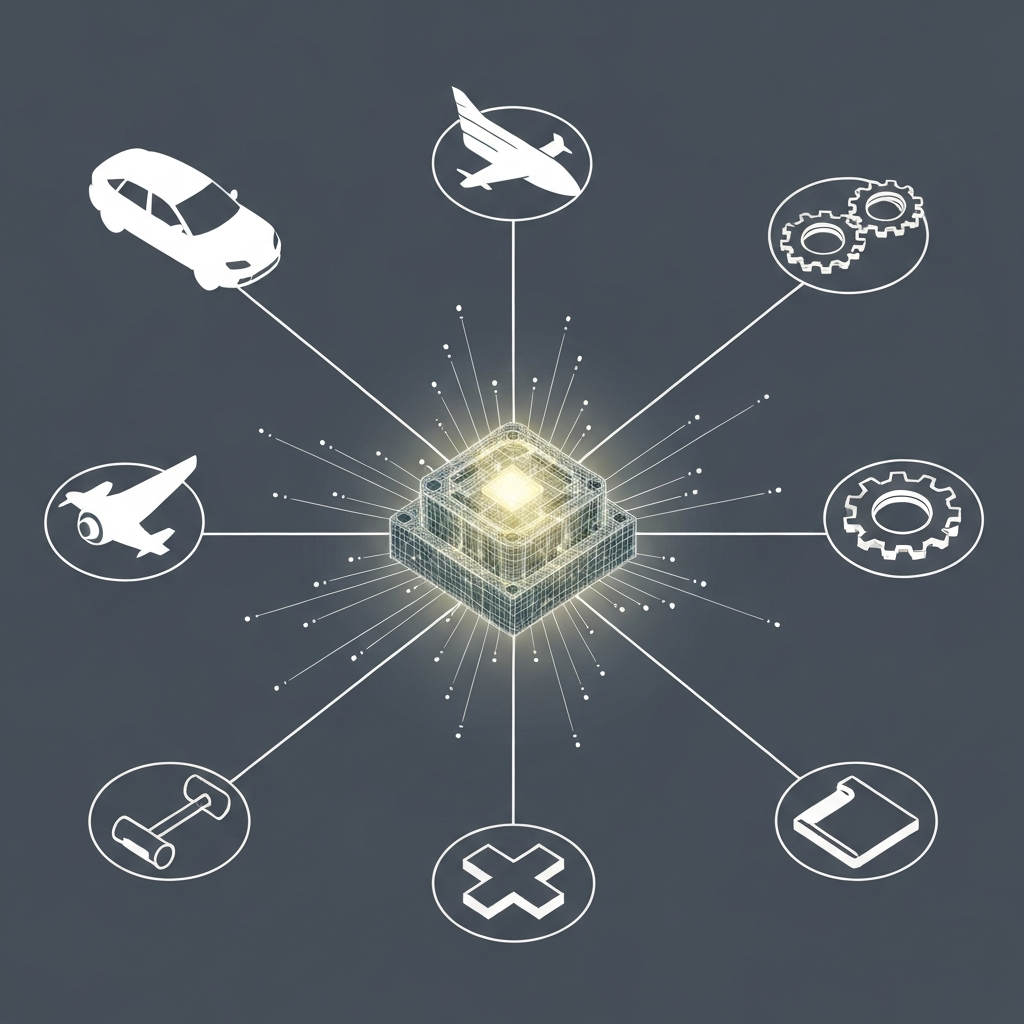
The versatility of 3D scanning enables its application across a broad spectrum of industrial processes. German companies are leveraging this technology in diverse ways, from initial design concepts to final product inspection.
Product Design and Prototyping
3D scanning services in Germany are instrumental in the early stages of product development. Designers and engineers use scanners to capture the geometry of existing physical models, ergonomic studies, or competitor products. This data can then be imported into CAD (Computer-Aided Design) software, allowing for modifications, improvements, or the creation of entirely new designs based on real-world forms. For complex organic shapes or existing parts needing integration into a new system, 3D scanning bypasses the tedious manual drafting process, significantly shortening the design cycle. The speed at which digital prototypes can be generated and refined using scanned data directly translates to faster time-to-market for new German innovations.
Quality Assurance and Inspection
Maintaining the stringent quality standards synonymous with German engineering requires robust inspection methods. 3D scanning provides a non-contact, highly precise way to perform dimensional analysis and quality control. A manufactured part can be scanned, and its resulting digital model can be directly compared against the original CAD design using metrology-grade 3D scanners. Software can then generate detailed reports highlighting any deviations, such as warpage, shrinkage, or manufacturing errors. This allows for immediate corrective action, reducing scrap rates and ensuring that components meet exact specifications. Industries like automotive and aerospace, where even minor deviations can have critical consequences, rely heavily on this capability. The 2026 landscape sees an increased focus on automated inspection workflows powered by 3D scanning data.
Reverse Engineering
When original design files are lost, outdated, or never existed (e.g., for legacy parts or competitor analysis), reverse engineering becomes essential. 3D scanning is the cornerstone of modern reverse engineering. High-resolution scanners capture the precise geometry of an existing physical object. This scan data, often in the form of a point cloud or mesh, is then processed by specialized software to create a clean, usable CAD model. This new CAD model can be used for manufacturing replacement parts, improving the original design, or integrating the component into a new digital assembly. For German manufacturers dealing with older machinery or needing to replicate obsolete parts, 3D scanning services offer a vital solution.
Digital Archiving and Documentation
Preserving the exact state of physical objects digitally is increasingly important for documentation, historical preservation, and future reference. 3D scanning can create highly accurate digital archives of components, tools, historical artifacts, or even entire facilities. This digital data serves as a permanent record, immune to physical degradation. For intellectual property protection, detailed 3D scans can serve as verifiable digital blueprints. In sectors like cultural heritage or museum studies, 3D scanning in Germany allows for detailed digital preservation and virtual exploration of valuable artifacts.
Customization and Additive Manufacturing (3D Printing)
The rise of Industry 4.0 and personalized products has fueled demand for custom solutions. 3D scanning enables mass customization by capturing individual requirements. For example, in medical technology, custom implants or prosthetics can be designed based on patient-specific anatomy captured via 3D scanning. In consumer goods, personalized ergonomic designs for tools or sporting equipment become feasible. Furthermore, 3D scanning is a critical step before additive manufacturing (3D printing). Scanning an existing part allows for its precise replication or modification and then printing a new version, often with improved materials or optimized designs. German companies are leveraging this for rapid prototyping and on-demand production of complex geometries.
Types of 3D Scanning Technologies Used in Germany
The effectiveness of a 3D scanning service depends heavily on the technology employed. Different applications require different levels of accuracy, speed, and detail. German service providers typically offer a range of technologies:
Laser Scanning
Laser scanners work by projecting a laser line or point onto the surface of an object and capturing the reflection with a sensor. By measuring the distance and angle of the reflected laser light, the scanner can calculate the 3D coordinates of points on the object’s surface.
- Types: Structured Light Scanning (uses projected light patterns, often LED-based) and Laser Triangulation (uses a laser line and camera).
- Pros: High accuracy, captures fine details, can work in various lighting conditions, relatively fast.
- Cons: Can struggle with highly reflective or transparent surfaces without special preparation (e.g., matting spray), line-of-sight required.
- Applications: Detailed inspection, reverse engineering of complex parts, tool and die making.
Contact Scanning (Coordinate Measuring Machines – CMMs)
While not strictly “scanning” in the non-contact sense, CMMs are crucial for high-precision dimensional metrology and are often integrated with 3D scanning workflows. CMMs use a physical probe to touch points on the object’s surface, recording their coordinates.
- Pros: Extremely high accuracy and repeatability, considered the gold standard for calibration and verification.
- Cons: Slow, requires physical contact (can damage delicate surfaces), limited to accessible points.
- Applications: Precision calibration, verification of critical dimensions on manufactured parts, R&D in high-accuracy fields.
Photogrammetry
Photogrammetry involves taking multiple overlapping photographs of an object from different angles. Specialized software then analyzes these images to reconstruct a 3D model based on identifying common features across the photos.
- Pros: Can capture large objects or environments, cost-effective with good camera equipment, captures color and texture information.
- Cons: Accuracy is generally lower than laser scanning for small, intricate details; requires good lighting and distinct surface features; processing can be computationally intensive.
- Applications: Capturing large structures, architectural modeling, cultural heritage documentation, generating textured models for visualization.
White Light Scanning
Similar to structured light scanning, white light scanners project specific light patterns (often diffuse white light) onto an object. Cameras capture the deformation of these patterns, allowing for precise 3D reconstruction.
- Pros: High accuracy and resolution, fast data acquisition, excellent for capturing intricate details and complex geometries, safe for various materials.
- Cons: Typically requires controlled lighting environments, can be sensitive to ambient light.
- Applications: Detailed reverse engineering, inspection of injection molded parts, dental and medical applications, fine art replication.
German 3D scanning service providers often combine these technologies to offer comprehensive solutions tailored to specific client needs, ensuring the optimal balance of accuracy, speed, and cost.
Choosing the Right 3D Scanning Service Provider in Germany
Selecting the appropriate service provider is critical for achieving the desired results. Several factors should be considered when evaluating 3D scanning services in Germany:
Expertise and Industry Specialization
Does the provider have experience with your specific industry (e.g., automotive, medical, aerospace)? Different sectors have unique requirements regarding accuracy, data formats, and regulatory compliance. A provider with proven expertise in your field will understand your challenges and deliver more relevant solutions. Look for case studies or client testimonials related to your industry.
Technology Portfolio
Does the provider offer a range of scanning technologies? As discussed, different applications suit different technologies. A provider with a diverse technological arsenal can recommend and utilize the most appropriate scanner for your object and project goals, rather than trying to fit your project into their limited toolset.
Accuracy and Resolution Capabilities
Understand the required level of accuracy and resolution for your project. For critical inspection tasks, metrology-grade scanners offering accuracies of microns might be necessary. For general reverse engineering or visualization, slightly lower accuracy might suffice. Ensure the provider’s equipment and expertise meet your precision needs. The ISO 17025 accreditation is a strong indicator of a provider’s commitment to quality and measurement accuracy.
Data Output and Software Compatibility
What file formats does the provider deliver (e.g., STL, OBJ, PLY, STEP, IGES)? Ensure these formats are compatible with your existing CAD, CAM, CAE, or visualization software. Some providers also offer additional services like CAD model creation, mesh cleanup, or surface fitting, which can save you significant post-processing time.
Turnaround Time and Scalability
Consider the provider’s typical turnaround time for projects similar to yours. If you have tight deadlines, a provider with efficient workflows and readily available equipment will be crucial. Also, assess their capacity to handle projects of varying sizes, from single components to large assemblies or even entire facilities.
Location and Logistics
While many services can be performed on-site, some require the object to be transported to the provider’s facility. Consider the logistical implications, especially for large, heavy, or delicate items. Proximity can sometimes reduce shipping costs and transit times. Many German providers operate nationwide, offering on-site services across major industrial hubs like Munich, Berlin, Hamburg, and Stuttgart.
Cost and Value Proposition
Obtain detailed quotes and understand what is included. Compare not just the price but the overall value. A slightly more expensive service might be more cost-effective if it offers higher accuracy, faster turnaround, or includes essential post-processing steps that you would otherwise have to pay for separately.
By carefully evaluating these factors, businesses can identify a 3D scanning service partner in Germany that aligns with their technical requirements, budget, and project timelines.
The Economic Impact and Future Trends of 3D Scanning in Germany
The integration of 3D scanning services is having a tangible economic impact on German industries. By streamlining processes, reducing errors, and enabling faster innovation, these services contribute directly to increased productivity and competitiveness.
Driving Innovation and R&D
3D scanning fuels research and development by providing rapid feedback loops. Engineers can quickly test design variations, analyze performance, and iterate towards optimal solutions. This acceleration is vital for Germany’s high-tech sectors, ensuring they remain at the forefront of global innovation. The ability to digitally replicate and analyze complex systems allows for deeper understanding and more sophisticated advancements.
Enhancing Manufacturing Efficiency
In manufacturing, 3D scanning minimizes costly errors in production. Automated quality control reduces scrap rates and rework, saving materials and labor. Reverse engineering capabilities ensure the longevity of production lines by enabling the creation of replacement parts for older machinery, preventing costly downtime. This operational efficiency is a hallmark of German industry and is further amplified by advanced scanning technologies.
Supporting the Digital Transformation (Industry 4.0)
3D scanning is a foundational technology for Industry 4.0 initiatives in Germany. It enables the creation of the “digital twin”—a virtual representation of a physical asset or process. These digital twins are central to smart manufacturing, predictive maintenance, and optimized supply chains. As Germany continues its digital transformation journey, the role of 3D scanning services will only expand, integrating seamlessly with IoT (Internet of Things) devices, AI (Artificial Intelligence), and advanced automation.
Future Trends
Looking ahead to the latter half of the 2020s and beyond, several trends are shaping the future of 3D scanning services in Germany:
- Increased Automation: Expect more automated scanning processes, robotic integration for scanning hard-to-reach areas, and AI-driven data analysis for faster insights.
- Higher Resolution and Accuracy: Advances in scanner technology will continue to push the boundaries of detail capture and measurement precision.
- Color and Texture Integration: Capturing high-fidelity color and texture data alongside geometry will become standard for many applications, particularly in visualization and AR/VR.
- On-Demand and Mobile Scanning: More portable and specialized scanning solutions will emerge, allowing for greater flexibility and on-site data acquisition.
- Cloud-Based Platforms: Cloud solutions will facilitate data sharing, collaboration, and processing, making advanced 3D scanning more accessible.
- Integration with Simulation: Tighter integration between 3D scan data and simulation software (FEA, CFD) will enable more accurate virtual testing and performance prediction.
The 3D scanning service sector in Germany is dynamic and poised for continued growth, driven by technological advancements and the persistent need for precision and efficiency across all industrial domains.
Frequently Asked Questions about 3D Scanning Services in Germany
This section addresses common questions regarding 3D scanning services within the German industrial landscape.
What is the typical cost of a 3D scanning service in Germany?
The cost of 3D scanning services in Germany varies significantly based on several factors including the size and complexity of the object, the required accuracy and resolution, the scanning technology used, the volume of data, and the turnaround time. Hourly rates for scanning specialists can range from €80 to €250 or more. Project-based pricing is also common, with a small object requiring simple scanning potentially costing a few hundred euros, while large-scale projects or those demanding extremely high precision (e.g., metrology-grade inspection) could run into thousands or tens of thousands of euros. Factors like on-site vs. off-site scanning, data processing requirements (e.g., CAD model creation), and travel expenses for on-site services also influence the final price. It is always recommended to obtain detailed quotes from multiple providers.
How accurate are 3D scanners used in Germany?
The accuracy of 3D scanners varies widely by technology and specific model. Industrial-grade scanners used in Germany can achieve accuracies ranging from ±0.1 mm (0.004 inches) for structured light scanners to ±0.005 mm (0.0002 inches) or even better for high-end metrology CMMs and laser trackers. Photogrammetry typically offers lower accuracy, often in the range of ±0.5 mm to several millimeters depending on scale and setup. The resolution, which refers to the smallest detail a scanner can capture, is also crucial and can range from sub-millimeter detail for high-resolution scanners to coarser data for capturing large objects quickly. The choice of scanner and service provider depends entirely on the precision required for the specific application.
Can 3D scanning services in Germany handle large objects like machinery or vehicles?
Yes, 3D scanning services in Germany are fully capable of handling large objects such as industrial machinery, automotive components, vehicles, and even architectural structures. Specialized equipment, including long-range laser scanners, laser trackers, and photogrammetry setups, are employed for these tasks. Often, these scans are performed on-site at the client’s facility due to the logistical challenges of moving large items. Providers equipped for large-scale projects can capture detailed digital models of complex assemblies, enabling reverse engineering, inspection, or digital archiving of substantial physical assets.
What industries in Germany benefit most from 3D scanning services?
Virtually all manufacturing and engineering-focused industries in Germany benefit significantly from 3D scanning services. However, sectors with stringent quality requirements, complex geometries, and a strong emphasis on innovation see the most pronounced advantages. These include:
- Automotive: For design, prototyping, quality control of parts, and reverse engineering of legacy components.
- Aerospace: For precise inspection of critical components, reverse engineering, and quality assurance of complex aerospace parts.
- Machinery and Tooling: For creating digital models of tools, molds, and machine parts for replication, modification, or inspection.
- Medical Technology: For custom prosthetics, implants, surgical planning, and quality control of medical devices.
- Consumer Goods: For product design, ergonomic studies, and customization of products.
- Energy Sector: For inspecting turbines, pipelines, and other large infrastructure components.
How long does it take to get a 3D scan completed?
The time required for a 3D scanning project depends on the object’s size, complexity, surface properties, and the desired level of detail and accuracy. Scanning itself can range from a few minutes for a small part to several hours or days for very large objects or complex assemblies requiring multiple setups. Post-processing, which includes cleaning the raw scan data (point cloud), generating a mesh, and potentially creating a CAD model, can often take longer than the scanning itself. Simple scans might be processed within a day or two, while complex projects requiring extensive cleanup and reverse engineering could take weeks. Providers will typically give an estimated turnaround time based on the project scope.
What is the difference between 3D scanning and 3D printing?
3D scanning and 3D printing are complementary but distinct technologies. 3D scanning is a data acquisition process that captures the physical shape of an existing object and converts it into a digital 3D model. It is about measuring and digitizing the real world. 3D printing (also known as additive manufacturing) is a data creation and fabrication process that builds a physical object layer by layer from a digital 3D model. It is about making things from digital designs. Essentially, 3D scanning can provide the digital file that a 3D printer uses to create a physical replica or a modified version of an original object.
Conclusion
In 2026, 3D scanning services in Germany stand as a critical enabler of industrial innovation, efficiency, and quality. From accelerating product development cycles in the automotive sector to ensuring the precision of aerospace components and facilitating mass customization, the applications are vast and impactful. German industries, renowned for their commitment to engineering excellence, are increasingly integrating these advanced digital technologies to maintain and enhance their global competitiveness. By understanding the available technologies, applications, and how to select the right service provider, businesses across Germany can harness the power of 3D scanning to unlock new possibilities, optimize operations, and secure their position in the evolving industrial landscape. The future points towards even greater integration, automation, and precision, solidifying 3D scanning’s role as an indispensable tool for German manufacturing and engineering.