Did you know that over 70% of manufacturers reported using 3D scanning in their product development processes in 2023? This technology is revolutionizing how businesses approach innovation, product improvement, and legacy part management. 3D scanning and reverse engineering services offer a powerful pathway to digitize physical objects, creating precise virtual models that can be used for a multitude of purposes, from quality control to rapid prototyping and beyond. Whether you’re looking to recreate a discontinued part, analyze a competitor’s product, or simply bring an old design into the digital age, understanding these services is key to unlocking new opportunities in 2026.
What Exactly is 3D Scanning and Reverse Engineering?
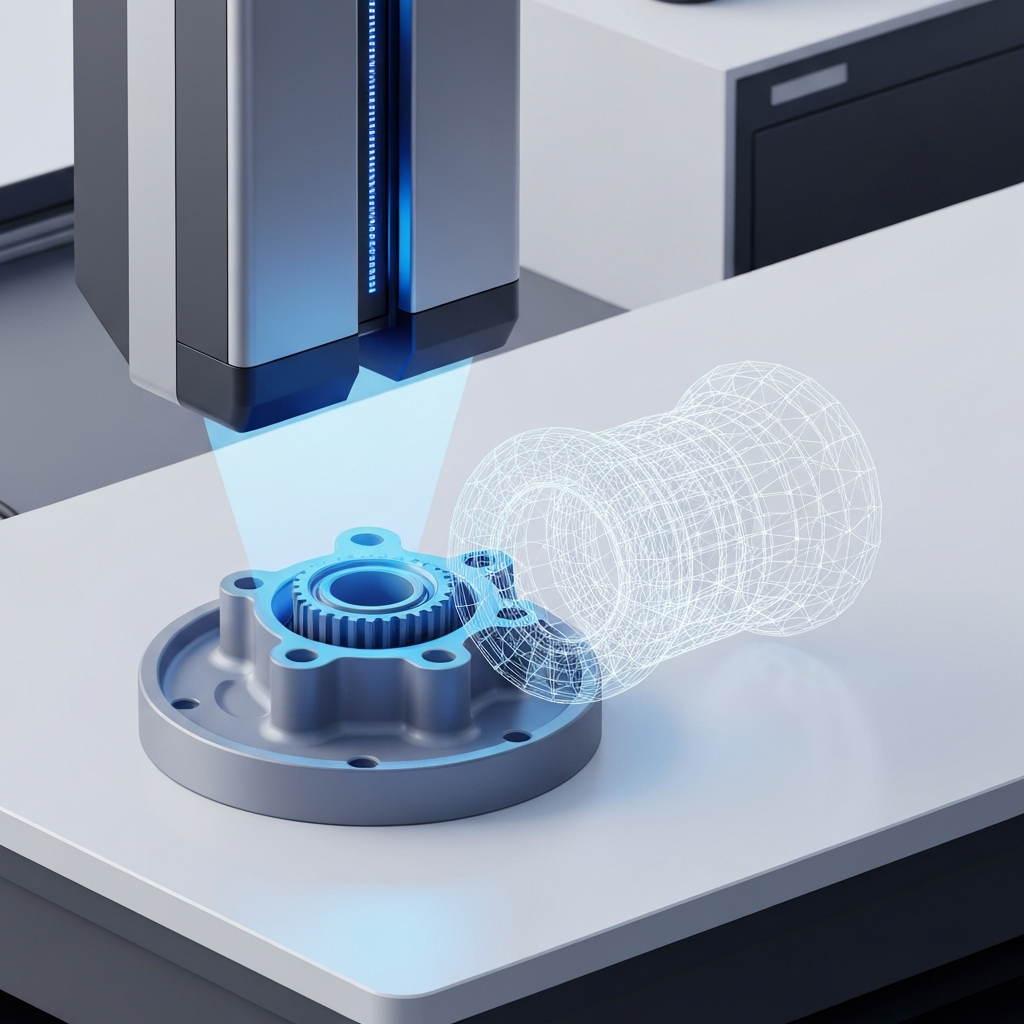
3D scanning and reverse engineering are two distinct but often complementary processes used to create digital representations of physical objects.
3D scanning is the process of capturing the shape and appearance of a real-world object. It uses specialized equipment, like laser scanners or structured light scanners, to measure points on the object’s surface. These points are then used to construct a 3D digital model, often in the form of a point cloud or a mesh. Think of it like taking a highly detailed, multi-dimensional photograph of an object. The accuracy and resolution of the scan depend heavily on the scanner technology and the complexity of the object.
Reverse engineering, on the other hand, is the process of deconstructing an object to understand its design, functionality, and components. When combined with 3D scanning, it involves scanning a physical part and then using that scan data to create a new, editable CAD (Computer-Aided Design) model. This new model can then be used to manufacture new parts, modify the original design, or analyze its underlying principles. It’s about looking at the finished product and figuring out how it was made, or how it could be improved.
Together, these services provide a bridge between the physical and digital worlds, enabling businesses to interact with their products in entirely new ways.
How Does a 3D Scanning Service Work?
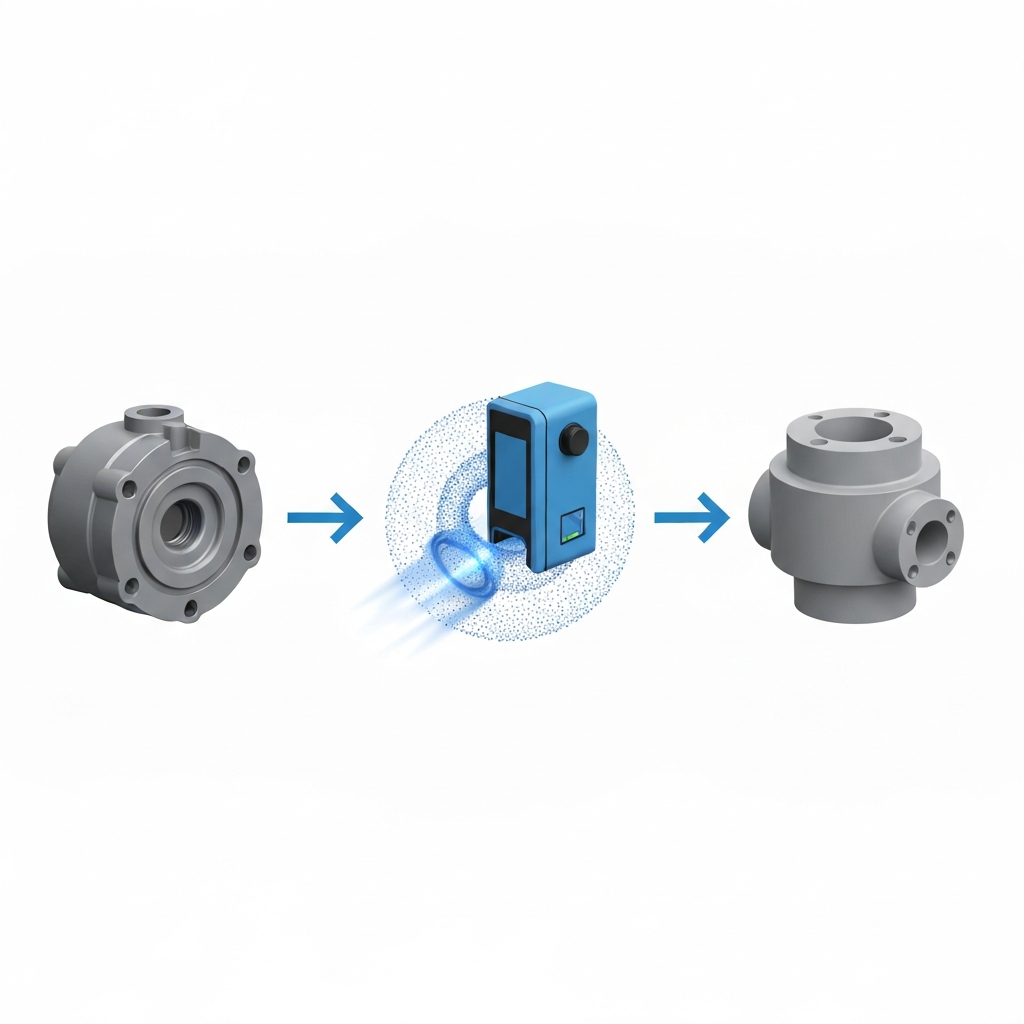
Engaging a professional 3D scanning service typically follows a structured workflow designed to ensure accuracy and deliver the desired digital output.
1. Consultation and Object Assessment
The process begins with a consultation. You’ll discuss your project goals with the service provider. This includes what you want to achieve with the scan data (e.g., CAD model for manufacturing, inspection report, visualization) and any specific requirements regarding accuracy, file format, or turnaround time. The provider will also assess the physical object to determine the best scanning technology and approach. Factors like object size, material, surface finish, and complexity all influence the choice of scanner.
2. Data Acquisition (The Scanning Process)
This is where the actual 3D scanning takes place. Depending on the object and the required precision, various scanning technologies might be employed:
- Laser Scanning: This method uses a laser beam projected onto the object. The scanner measures the reflected light to calculate the distance to the object’s surface, capturing thousands or millions of data points. Laser scanners are known for their speed and ability to capture large objects.
- Structured Light Scanning: This technique projects a pattern of light (often a grid or series of lines) onto the object. Cameras then analyze the distortion of this pattern as it deforms across the object’s surface. This allows for very high-resolution scans, ideal for intricate details.
- Photogrammetry: This involves taking numerous overlapping photographs of the object from different angles. Specialized software then processes these images to reconstruct a 3D model. Photogrammetry is cost-effective for capturing texture and color, but may require more processing time.
- Contact Probing: For extremely high accuracy requirements on specific features, a CMM (Coordinate Measuring Machine) probe might be used. This physically touches the object’s surface at predefined points.
The scanning environment is critical. It needs to be stable, with controlled lighting to avoid interference. For delicate or large objects, the scanning might occur on-site at your facility, or the object may need to be transported to the service provider’s lab.
3. Data Processing and Clean-up
Raw scan data often comes in the form of a “point cloud”—a dense collection of individual data points representing the object’s surface. This point cloud is usually noisy and may contain extraneous data from the background or the scanning equipment itself.
The service provider will process this raw data using specialized software. This involves:
- Alignment: Combining multiple scans taken from different angles into a single, cohesive point cloud.
- Registration: Ensuring that different scan sessions accurately align with each other.
- Noise Reduction: Filtering out erroneous data points.
- Meshing: Converting the cleaned point cloud into a surface model, typically a polygon mesh made up of triangles or quadrilaterals. This mesh represents the continuous surface of the object.
4. CAD Model Creation (Reverse Engineering)
If the goal is to create an editable CAD model, the meshed data serves as a blueprint. The reverse engineering specialists will then use CAD software to build a parametric or direct model based on the scanned mesh. This involves:
- Surface Reconstruction: Creating smooth, mathematically defined surfaces (NURBS surfaces) that accurately represent the scanned geometry.
- Feature Recognition: Identifying standard geometric features like cylinders, spheres, planes, and extrusions, which can be used to build a feature-based CAD model.
- Model Refinement: Adding fillets, chamfers, and other design elements to create a clean, manufacturable CAD model.
The level of detail and the type of CAD model created (e.g., solid model, surface model, feature-based parametric model) depend entirely on the project requirements.
5. Quality Assurance and Delivery
Before delivery, the final digital model undergoes rigorous quality assurance. This might involve comparing the CAD model back to the original scan data or performing dimensional analysis to verify accuracy against specified tolerances. The service provider will then deliver the final files in the agreed-upon format (e.g., STL, OBJ, STEP, IGES, native CAD formats like SolidWorks or CATIA).
Key Technologies Used in 3D Scanning Services
The effectiveness of a 3D scanning and reverse engineering service hinges on the technology employed. Providers utilize a range of advanced tools to capture and process data with varying degrees of precision and speed.
Laser Scanners
Laser scanners are a cornerstone of many 3D scanning operations. They work by projecting a laser line or point onto an object and measuring the deformation or reflection of the light.
- Handheld Laser Scanners: These are versatile and allow operators to move the scanner around the object. They are excellent for capturing medium-sized objects and offer a good balance of speed and accuracy. Many modern handheld scanners use blue or green laser technology, which performs better on shiny or dark surfaces compared to older red laser systems.
- Tripod-Mounted Laser Scanners: These offer higher accuracy and are suitable for larger objects or environments where stability is paramount. They often provide a wider scanning range and can capture finer details over a broader area.
Structured Light Scanners
Structured light technology offers exceptional detail and accuracy, making it ideal for inspecting small, intricate parts or capturing complex organic shapes.
- How it Works: A projector casts a known pattern of light onto the object. Multiple cameras capture how this pattern deforms across the object’s surface. Software analyzes these distortions to calculate precise 3D coordinates for millions of points.
- Advantages: High resolution, fast capture speeds, and excellent for capturing fine surface details and textures. They are particularly good for objects with complex geometries that might be challenging for laser scanners.
Coordinate Measuring Machines (CMMs)
While not strictly a “scanning” technology in the non-contact sense, CMMs are crucial for reverse engineering and inspection when extreme accuracy is required.
- Contact Probing: CMMs use a physical probe that touches the surface of the object at specific points. The precise location of these points is recorded.
- High Precision: CMMs offer the highest levels of accuracy and repeatability, making them indispensable for critical dimensions and tolerances in industries like aerospace and medical device manufacturing. They are often used to verify the accuracy of a 3D scan or to capture key reference points.
Photogrammetry Software
Photogrammetry leverages standard digital photography to create 3D models.
- Process: A large number of overlapping photos are taken from various angles. Sophisticated software identifies common points across these images and triangulates their positions in 3D space to build a model.
- Strengths: Excellent for capturing realistic color textures and surface appearances. It can be a cost-effective solution for certain applications, especially for digitizing large scenes or objects where high geometric accuracy is secondary to visual representation.
The choice of technology depends on the specific application, the object’s characteristics, and the desired outcome, such as the level of detail, accuracy requirements, and budget.
The Reverse Engineering Process in Detail
Reverse engineering, when paired with 3D scanning, is a methodical process aimed at recreating or analyzing an existing physical part in a digital format.
1. Initial Scan Data Preparation
As mentioned, the first step after acquiring the 3D scan data (point cloud or mesh) is thorough processing. This involves cleaning the data, removing any unwanted artifacts, and aligning multiple scans if necessary. The goal is to have a clean, accurate digital representation of the physical object’s surface.
2. CAD Model Generation
This is the core of the reverse engineering phase. Using the processed scan data as a reference, engineers create a CAD model. There are several approaches:
- Direct Modeling from Mesh: The software essentially traces over the scanned mesh to create new surfaces. This is often faster but results in a less intelligent, non-parametric model. It’s useful for visualization or when the original design intent is unknown or unimportant.
- Surface Reconstruction: Sophisticated algorithms are used to generate smooth, mathematically defined surfaces (like NURBS) that perfectly fit the scanned data. This creates a highly accurate, often aesthetically pleasing surface model.
Feature-Based Modeling: This is the most advanced and often most valuable approach. Engineers identify standard geometric shapes (primitives) within the scan data—cylinders, spheres, cones, planes, extrusions, revolutions—and reconstruct them using CAD software’s native modeling tools. This results in a parametric* CAD model, meaning it has a design history and features that can be easily edited, modified, or updated. For instance, if a hole was scanned, a feature-based model would recreate it as a true cylindrical feature, allowing you to easily change its diameter or depth later.
3. Design Intent and Feature Recognition
A crucial aspect of high-quality reverse engineering is understanding and recreating the original “design intent.” This means not just matching the shape, but also understanding why the part was designed that way. Feature-based modeling excels here. By recognizing standard features, the resulting CAD model is not just a digital copy but a usable engineering asset. This allows for:
- Modification: Easily changing dimensions, adding features, or simplifying the design.
- Analysis: Performing simulations (like Finite Element Analysis – FEA) on a model that understands its geometric features.
- Manufacturing: Creating toolpaths for CNC machining or designing molds based on a model with clear, defined features.
4. File Output and Deliverables
The final output is typically a CAD file in a standard format. Common formats include:
- STEP (Standard for the Exchange of Product model data): A universal format for sharing 3D CAD data across different software systems.
- IGES (Initial Graphics Exchange Specification): Another older but still widely used format for CAD data exchange.
- Native CAD Formats: Files specific to CAD software like SolidWorks (.SLDPRT, .SLDASM), Autodesk Inventor (.IPT, .IAM), CATIA (.CATPart, .CATProduct), or Siemens NX (.PRT).
- Mesh Formats: STL or OBJ are common for 3D printing or visualization, but lack the editable feature data of CAD files.
The choice of output format depends on how the digital model will be used downstream.
Applications of 3D Scanning and Reverse Engineering Services
The versatility of these services makes them invaluable across a wide spectrum of industries and applications.
Manufacturing and Product Development
- Prototyping: Quickly create digital models of existing parts for rapid prototyping, allowing for faster design iterations.
- Tooling and Mold Design: Scan existing parts to design or update injection molds, stamping dies, or casting patterns.
- Legacy Part Replication: Recreate obsolete or hard-to-find parts for which original CAD data is lost. This is critical for maintaining older machinery or producing replacement components.
- Design Improvement: Scan an existing product to identify areas for improvement in form, fit, or function, then use the CAD data to implement changes.
Quality Control and Inspection
- Dimensional Analysis: Compare a 3D scan of a manufactured part against its original CAD design to identify deviations and ensure it meets specifications. This is often referred to as Computer-Aided Inspection (CAI).
- First Article Inspection: Verify that the first production run of a part matches the design intent accurately.
- Root Cause Analysis: Scan failed components to understand the stresses or defects that led to failure.
Aerospace and Automotive
- Component Digitization: Scan complex aerospace components like turbine blades or automotive parts like engine blocks for analysis, modification, or replication.
- Restoration Projects: Digitally recreate classic car or aircraft parts for restoration purposes, ensuring authenticity and fit.
- Performance Analysis: Scan aerodynamic surfaces to verify their shape and optimize performance.
Medical and Dental
- Custom Prosthetics and Orthotics: Scan patient anatomy to create perfectly fitting custom braces, implants, or prosthetic limbs.
- Surgical Planning: Create patient-specific 3D models from CT or MRI scans for pre-surgical visualization and planning.
- Dental Restorations: Scan dental impressions or existing crowns to design and mill new, precise restorations.
Architecture and Cultural Heritage
- As-Built Documentation: Scan existing buildings or structures to create accurate digital models for renovation or facility management.
- Historic Preservation: Digitize artifacts, sculptures, or entire historical sites for preservation, research, or virtual reconstruction.
Forensics and Product Analysis
- Accident Reconstruction: Scan accident scenes or damaged vehicles to create detailed 3D models for analysis.
- Competitive Analysis: Scan a competitor’s product to understand its design, materials, and manufacturing techniques.
Benefits of Using a Professional 3D Scanning and Reverse Engineering Service
While in-house capabilities are growing, leveraging professional services offers distinct advantages, particularly for businesses needing specialized expertise or handling complex projects.
- Access to Advanced Technology: Service providers invest in high-end, calibrated 3D scanners and sophisticated software that may be prohibitively expensive for many companies to purchase and maintain. This ensures access to the latest technology for optimal results.
- Expertise and Experience: Professional teams possess deep knowledge of various scanning technologies, materials, and reverse engineering techniques. They understand how to handle challenging surfaces, complex geometries, and stringent accuracy requirements.
- Time and Cost Efficiency: Outsourcing allows your team to focus on core competencies. Service providers often complete projects faster due to specialized workflows and equipment, leading to quicker time-to-market for your products. For one-off or infrequent needs, outsourcing is almost always more cost-effective than acquiring and training staff for in-house capabilities.
- Scalability: Professional services can easily scale to accommodate projects of varying sizes and complexities, from scanning a single small component to digitizing an entire factory floor.
- Accuracy and Reliability: Reputable services adhere to strict quality control protocols, ensuring the delivered digital models are accurate and reliable for their intended purpose, whether it’s manufacturing, inspection, or analysis.
- Diverse File Formats: They can deliver data in virtually any required file format, ensuring compatibility with your existing CAD, CAM, CAE, or visualization software.
Choosing the Right 3D Scanning and Reverse Engineering Service Provider
Selecting the appropriate service provider is crucial for project success. Consider these factors:
- Industry Experience: Does the provider have experience in your specific industry (e.g., medical, automotive, aerospace)? This often translates to a better understanding of your unique requirements and challenges.
- Technology Portfolio: What types of 3D scanners and software do they use? Ensure their technology aligns with your accuracy, resolution, and object size needs. Ask about their calibration procedures.
- Expertise in Reverse Engineering: Beyond just scanning, do they have skilled engineers capable of creating intelligent, feature-based CAD models if that’s what you require? Can they interpret design intent?
- Accuracy and Tolerances: Clearly define your required level of accuracy. Ask the provider about their typical achievable tolerances and how they verify them. Look for providers who mention specific accuracy metrics (e.g., +/- 0.02mm).
- Project Management and Communication: How do they manage projects? Is their communication clear and responsive? A good provider will keep you informed throughout the process.
- Deliverables and File Formats: Confirm they can provide the final data in the exact file formats you need.
- Client Testimonials and Case Studies: Review their past work and client feedback. This provides insight into their capabilities and reliability.
- Pricing Structure: Understand their pricing model. Is it based on scan time, project complexity, data processing hours, or a fixed project fee? Ensure transparency.
- Confidentiality: If you are dealing with proprietary designs, ensure the provider has robust Non-Disclosure Agreements (NDAs) and security protocols in place.
The Future of 3D Scanning and Reverse Engineering
The field of 3D scanning and reverse engineering is continuously evolving. Advancements in sensor technology, artificial intelligence, and cloud computing are pushing the boundaries of what’s possible.
- Increased Speed and Accuracy: Scanners are becoming faster, more portable, and capable of capturing finer details with even greater precision.
- AI-Powered Processing: Artificial intelligence is being integrated into software to automate data processing, noise reduction, and feature recognition, significantly speeding up the reverse engineering workflow.
- Real-time Scanning: Future developments may allow for near real-time conversion of scanned data into usable CAD models.
- Integration with Digital Twins: 3D scanning plays a vital role in creating and updating digital twins—virtual replicas of physical assets—enabling advanced monitoring, simulation, and predictive maintenance.
- Democratization of Technology: As the technology becomes more accessible and user-friendly, its adoption will continue to grow across industries, from small businesses to large enterprises.
These advancements promise to make 3D scanning and reverse engineering even more accessible and powerful tools for innovation and problem-solving in the years to come.
Conclusion
3D scanning and reverse engineering services are no longer niche technologies; they are essential tools for businesses seeking to innovate, optimize, and compete in the modern marketplace. By transforming physical objects into accurate digital data, these services unlock capabilities ranging from rapid prototyping and legacy part replication to rigorous quality control and competitive analysis. Leveraging professional expertise and advanced technology ensures that businesses can efficiently and accurately digitize their physical assets, driving product development cycles forward and maintaining the longevity of critical components. As technology continues to advance, the power and accessibility of these services will only grow, making them an indispensable part of any forward-thinking company’s strategy in 2026 and beyond.
Frequently Asked Questions
What is the primary difference between 3D scanning and reverse engineering?
3D scanning captures the physical geometry of an object to create a digital point cloud or mesh. Reverse engineering uses this scan data, often along with other analysis, to understand the object’s design and recreate it as an editable CAD model, inferring design intent. Scanning is the data capture; reverse engineering is the interpretation and reconstruction into a usable design format.
How accurate are 3D scans?
The accuracy of a 3D scan depends heavily on the technology used, the scanner’s calibration, the object’s size and surface properties, and the expertise of the operator. Professional services can achieve accuracies ranging from several millimeters down to a few microns (0.001 mm) for highly specialized applications using technologies like CMMs or high-resolution structured light scanners.
Can any object be 3D scanned?
Most solid objects can be 3D scanned. However, certain materials and surface conditions present challenges. Highly transparent, reflective, or extremely dark surfaces can be difficult for optical scanners. Service providers often use specialized coatings or techniques to overcome these challenges. Very small or very large objects may require specific types of scanners or multiple scanning sessions.
What file formats can I expect from a 3D scanning service?
Service providers typically offer a wide range of output file formats. Common mesh formats include STL and OBJ, often used for 3D printing and visualization. For CAD applications, formats like STEP, IGES, Parasolid, and native CAD files (e.g., SolidWorks, CATIA, Inventor) are usually available, especially after a reverse engineering process that creates an editable model.
How long does a 3D scanning and reverse engineering project take?
Project timelines vary significantly based on the object’s complexity, size, required accuracy, and the desired output. Simple 3D scanning of a small part might take a few hours, including data processing. A complex reverse engineering project requiring a detailed, feature-based CAD model could take several days or even weeks. Consultation with the service provider is necessary to get an accurate estimate.
Is reverse engineering legal?
Reverse engineering is generally legal for specific purposes, such as interoperability, security analysis, or recreating non-patented or expired-patent designs. However, it can infringe on intellectual property rights (like patents or copyrights) if the intent is to directly copy and sell a protected design or product. It is crucial to understand the legal implications and ensure compliance with relevant laws and agreements, especially regarding patents and trade secrets, before undertaking reverse engineering. Always consult legal counsel if unsure.