The manufacturing landscape in Germany, a global powerhouse of engineering and innovation, is rapidly evolving. In 2026, businesses across sectors like automotive, aerospace, medical technology, and consumer goods are increasingly turning to advanced digital solutions to maintain their competitive edge. One such transformative technology is 3D scanning, a process that bridges the gap between physical objects and digital design. This guide explores the burgeoning 3D scanning service Germany market, detailing how it empowers companies to create precise CAD models from real-world parts, fostering innovation, improving quality control, and streamlining product development lifecycles.
A staggering 95% of German manufacturers identified digitalization as a key strategic priority in recent surveys, highlighting a strong commitment to adopting new technologies like 3D scanning. This technology is not merely about creating a digital replica; it’s about unlocking a wealth of data that can be leveraged for design modifications, reverse engineering, quality assurance, and digital archiving. Whether you need a 3D scanning and reverse engineering service to recreate obsolete parts or a precise digital twin for a new product, Germany offers a robust ecosystem of specialized providers.
This comprehensive guide will delve into the intricacies of 3D scanning services available in Germany. We will examine the various technologies employed, the industries benefiting most, the typical workflow, and the critical factors to consider when selecting a service provider, with a special focus on the availability of a 3D scanning service in Frankfurt.
What is 3D Scanning and How Does It Work?
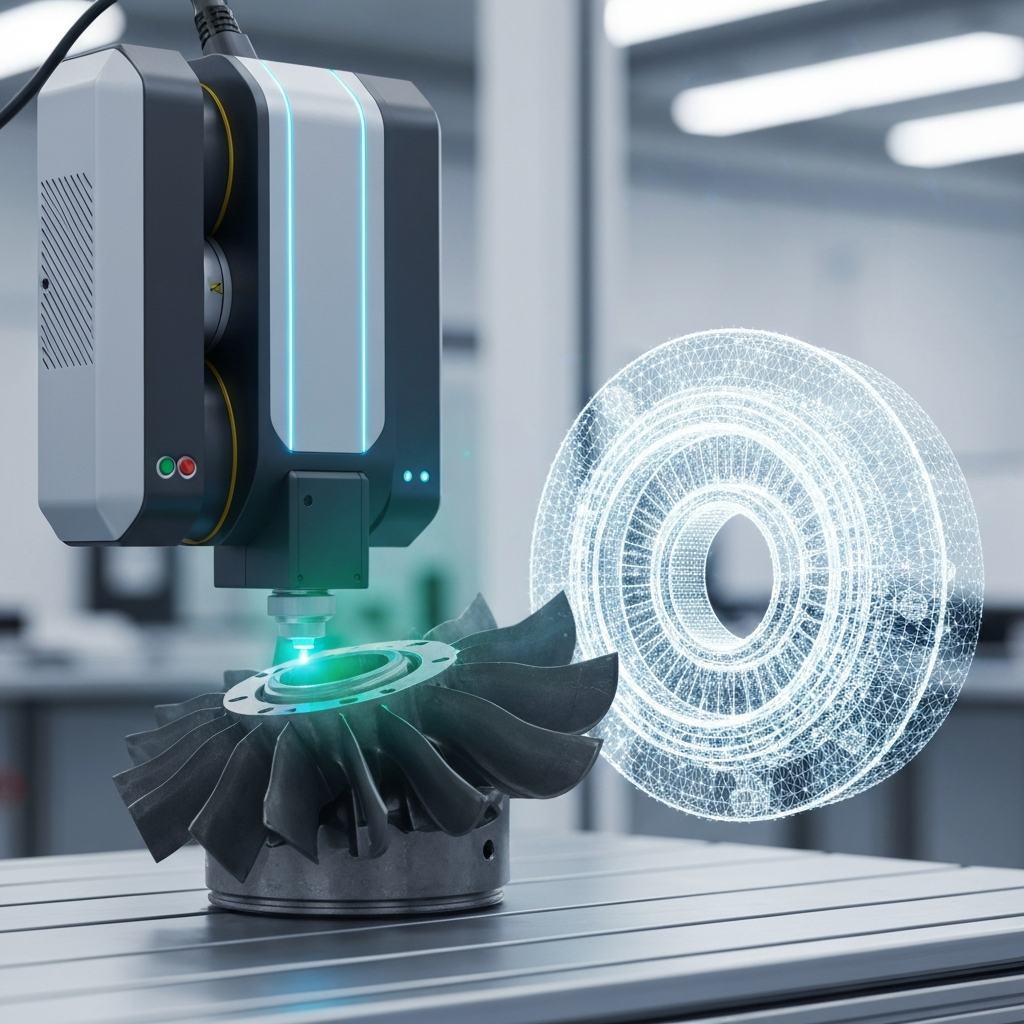
3D scanning is a process that analyzes a real-world object or environment to collect data on its shape and appearance. This data is then used to construct a digital, three-dimensional model. Think of it as taking a highly detailed photograph, but instead of capturing a flat image, it captures the object’s geometry in three dimensions. This digital model can then be used in various applications, most notably for creating Computer-Aided Design (CAD) files.
The core principle involves projecting light, lasers, or other energy waves onto an object and measuring the reflections or distortions. Different types of 3D scanners use distinct methodologies:
- Laser Scanners: These devices project a laser line or point onto the object’s surface. Cameras or sensors then triangulate the position of the laser spot, capturing precise geometric data. Laser scanners are known for their speed and accuracy, making them suitable for large objects and complex geometries.
- Structured Light Scanners: These scanners project a pattern of light (often a grid or series of lines) onto the object. The scanner then analyzes the deformation of this pattern on the object’s surface to calculate its 3D shape. Structured light scanners are excellent for capturing fine details and surface textures.
- Contact Scanners (CMMs): While less common for rapid 3D capture, Coordinate Measuring Machines (CMMs) use a physical probe to touch the object’s surface at multiple points, recording their coordinates. These are typically used for highly precise metrology applications rather than general 3D modeling.
- Photogrammetry: This technique uses multiple overlapping photographs taken from different angles. Specialized software then analyzes these images to reconstruct a 3D model of the subject. Photogrammetry is cost-effective and can capture color and texture information exceptionally well, though accuracy can depend heavily on image quality and software algorithms.
The output of a 3D scanner is typically a “point cloud,” which is a vast collection of data points representing the object’s surface. This raw data is then processed using specialized software. This processing involves:
- Meshing: Connecting the points in the cloud to form a surface made of polygons (usually triangles).
- Surface Reconstruction: Creating a smooth, watertight surface model from the mesh.
- CAD Conversion: Translating the surface model into a usable CAD format (like STEP, IGES, or native CAD files), which can include solid models or surface models, depending on the object’s complexity and the desired application.
Why is 3D Scanning Crucial for German Industry in 2026?
Germany’s industrial prowess is built on precision, quality, and continuous innovation. In the current economic climate of 2026, 3D scanning services in Germany are indispensable tools for maintaining and enhancing these core strengths. The ability to accurately digitize physical objects offers a multitude of benefits:
- Reverse Engineering: Companies often need to recreate parts for which original design data is lost, obsolete, or never existed digitally. 3D scanning provides the foundation for reverse engineering, allowing engineers to create accurate CAD models that can be used for manufacturing replacements, improving designs, or integrating legacy components into new systems. This is particularly vital in industries with long product lifecycles, like aerospace and heavy machinery.
- Quality Control and Inspection: Comparing a scanned physical part against its original CAD model allows for rapid and precise inspection. Deviations from the design specifications can be quickly identified, flagged, and rectified, ensuring that manufactured parts meet stringent quality standards. This proactive approach minimizes waste and costly rework.
- Product Development and Prototyping: 3D scanning can capture existing designs or ergonomic studies of physical prototypes. This digital data can then be used to refine designs, create variations, or prepare for rapid prototyping using 3D printing or traditional manufacturing methods.
- Digital Archiving: Preserving accurate digital records of physical assets is crucial for maintenance, historical documentation, and intellectual property protection. 3D scanning provides a comprehensive digital archive of parts, tools, and even entire assemblies.
- Customization and Bespoke Solutions: For industries requiring highly customized products, such as medical implants or specialized machinery, 3D scanning allows for the precise digitization of patient anatomy or unique requirements, enabling the creation of perfectly tailored solutions.
- Tooling and Mold Making: Accurate digital models derived from 3D scans are essential for the design and manufacturing of molds, dies, and tooling, ensuring they precisely match the intended part geometry.
The German market, known for its high standards, demands accuracy and reliability. Providers offering a comprehensive 3D scanning and reverse engineering service are therefore in high demand, enabling local manufacturers to leverage these benefits effectively.
Key Industries Benefiting from 3D Scanning Services in Germany
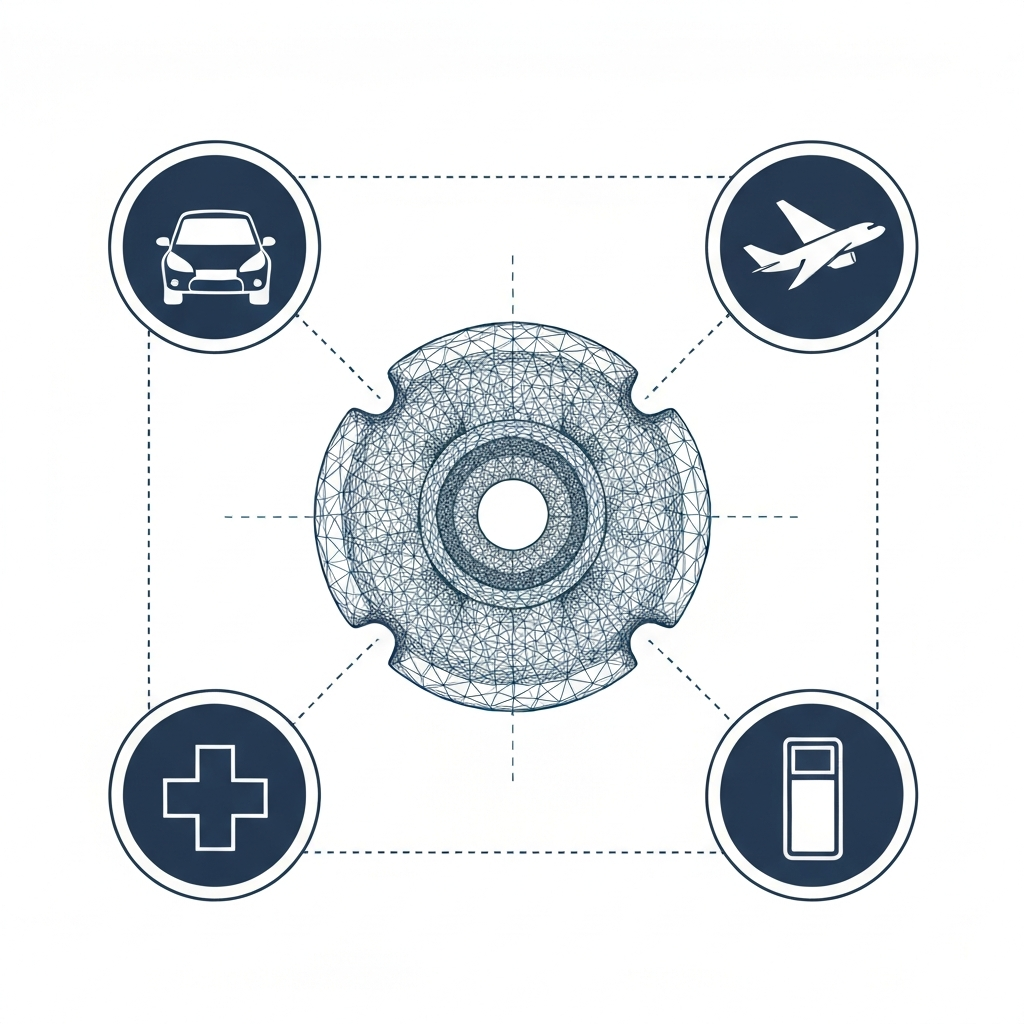
The versatility of 3D scanning makes it applicable across a wide spectrum of German industries. However, certain sectors are experiencing particularly significant transformations due to its adoption:
Automotive Industry
Germany’s automotive sector, a global leader, relies heavily on precision engineering. 3D scanning is used for:
- Digitizing legacy parts: For classic car restoration or sourcing replacement parts for older models where original tooling is gone.
- Quality inspection: Ensuring new components match CAD specifications within tight tolerances.
- Design iteration: Capturing modifications made to physical prototypes for subsequent digital refinement.
- Aftermarket part development: Creating CAD models for aftermarket components based on existing vehicle parts.
Aerospace and Defense
This sector demands unparalleled accuracy and reliability. 3D scanning supports:
- Component inspection: Verifying the precise geometry of critical aircraft and spacecraft components.
- MRO (Maintenance, Repair, and Overhaul): Digitizing worn or damaged parts to facilitate repair or replacement manufacturing.
- Development of new aircraft: Capturing complex aerodynamic surfaces and internal structures for digital modeling.
- Tooling verification: Ensuring the accuracy of jigs, fixtures, and molds used in production.
Medical Technology
The precision required for medical devices and implants makes 3D scanning invaluable:
- Custom implant design: Scanning patient anatomy (bones, tissues) to create custom-fit surgical implants.
- Prosthetics and orthotics: Developing personalized prosthetic limbs and orthotic devices.
- Device inspection: Ensuring the dimensional accuracy of intricate medical instruments and devices.
- Biomechanical analysis: Creating digital models of anatomical structures for research and simulation.
Manufacturing and Engineering
Across general manufacturing, 3D scanning aids in:
- Tool and die making: Digitizing master models or scanned parts to create precise tooling.
- Product refinement: Analyzing existing products to identify areas for improvement in form or function.
- Manufacturing process optimization: Digitizing fixtures and tooling to ensure alignment and efficiency.
- Machinery maintenance: Creating digital records of machine parts for easier replacement sourcing.
Consumer Goods and Electronics
Even in consumer products, 3D scanning plays a role:
- Ergonomic design studies: Scanning user interactions with physical mock-ups.
- Competitor analysis: Digitizing competitor products to understand their design and construction.
- Custom product development: Enabling personalized versions of products based on specific user inputs.
A reliable 3D scanning service Germany provider will understand the specific needs and standards of these diverse industries, offering tailored solutions.
The Process: From Physical Object to Digital CAD Model
Engaging a professional 3D scanning service Germany provider typically follows a structured workflow to ensure accuracy and efficiency. Understanding these steps helps clients prepare and collaborate effectively:
- Consultation and Object Assessment: The process begins with a detailed discussion. The service provider will want to understand your goals: What is the object? What level of accuracy is required? What is the intended use of the final CAD model (e.g., manufacturing, simulation, archiving)? They will assess the object’s size, material, surface finish, and complexity, which influences the choice of scanning technology.
- Object Preparation: Depending on the scanning method and the object’s properties, preparation might be necessary. This can include:
- Cleaning: Removing dirt, grease, or debris that could interfere with scanning.
- Masking: Covering reflective or transparent surfaces with a matte spray (developer spray) to allow the scanner to capture data accurately.
- Target Placement: Applying small, precisely positioned markers (targets) to the object’s surface. These targets help the scanning software align multiple scans accurately, especially for complex geometries or when scanning from different angles.
- Data Acquisition (Scanning): The 3D scanner captures the object’s geometry. Depending on the object’s size and complexity, this may involve multiple scans taken from various positions. For larger objects or intricate details, the provider might use portable scanners on-site or require the object to be brought to their facility. A 3D scanning service in Frankfurt, for instance, would typically have dedicated facilities equipped for this stage.
- Point Cloud Processing: The raw data collected by the scanner is a dense “point cloud.” This data is imported into specialized software. The provider cleanses the point cloud by removing extraneous data points (e.g., from the background or unwanted features) and then aligns and merges multiple scans into a single, cohesive point cloud representing the entire object.
- Meshing and Surface Creation: The processed point cloud is converted into a polygonal mesh (usually triangles). This mesh forms the surface of the digital model. The provider refines this mesh, ensuring it is watertight (no holes) and captures the necessary level of detail.
- CAD Model Generation: This is a critical step, especially for a comprehensive 3D scanning and reverse engineering service. The mesh model is used to create a CAD model. This can take several forms:
- Surface Model: A collection of NURBS surfaces that accurately represent the object’s geometry. This is often suitable for complex, freeform shapes.
- Solid Model: A model defined by its boundaries, possessing volume and mass properties. This is ideal for manufacturing and engineering applications where features like extrusions, cuts, and fillets are important. Creating a solid model often requires more interpretation and reconstruction by the engineer.
- Parametric Model: In some cases, particularly with reverse engineering, the goal is to create a parametric CAD model that captures not just the shape but also the design intent (e.g., original sketch planes, features, dimensions). This allows for easier modification later.
- Quality Assurance and Delivery: The final CAD model is meticulously checked against the scan data and the client’s requirements for accuracy and completeness. The provider delivers the model in the agreed-upon file format (e.g., STEP, IGES, STL, native CAD formats like SolidWorks or CATIA).
Choosing the Right 3D Scanning Service Provider in Germany
Selecting the appropriate partner for your 3D scanning service Germany needs is crucial for project success. Consider these factors:
- Expertise and Experience: Look for providers with a proven track record, particularly in your specific industry. Do they understand the nuances of automotive parts, medical devices, or industrial machinery?
- Technology and Equipment: What types of 3D scanners do they employ? Ensure their technology is suitable for the size, material, and accuracy requirements of your objects. Do they offer a range of technologies (laser, structured light, photogrammetry) to provide the best solution?
- Accuracy and Resolution: Understand the precision capabilities of their equipment and processes. Ask for examples of accuracy achieved on similar projects. The required accuracy will depend heavily on the application – a mold insert needs higher accuracy than a visual prototype.
- Software Capabilities: Proficiency in various CAD and reverse engineering software is essential for delivering usable models. Can they provide parametric models if needed?
- Turnaround Time: Discuss project timelines upfront. How quickly can they deliver the processed data and final CAD models? This is critical for time-sensitive product development cycles.
- Location and Logistics: If you need on-site scanning or wish to deliver parts physically, the provider’s location matters. A 3D scanning service in Frankfurt might be ideal for businesses in the Rhine-Main region due to proximity and accessibility. Consider shipping costs and risks if sending parts internationally or across Germany.
- Pricing Structure: Understand how they charge – per project, per hour, or based on data volume? Ensure the pricing is transparent and fits your budget. Get detailed quotes outlining all services included.
- Communication and Support: Choose a provider who communicates clearly, understands your technical requirements, and offers responsive support throughout the project.
- Confidentiality: For sensitive projects involving proprietary designs, ensure the provider has robust confidentiality agreements and practices in place.
The Role of Reverse Engineering in Modern Manufacturing
When discussing 3D scanning and reverse engineering service, it’s important to highlight the synergy between these disciplines. Reverse engineering is the process of deconstructing a product or component to understand its design, function, and manufacturing methods. 3D scanning is often the first and most critical step in this process for physical objects.
In 2026, reverse engineering is not just about copying; it’s a strategic tool for:
- Modernization: Taking an old, perhaps inefficient, design and using its scanned data as a basis for a modernized, optimized version using current materials and manufacturing techniques.
- Competitive Analysis: Understanding how competitors design and build their products to inform your own development strategies.
- Interoperability: Ensuring new components or systems can interface seamlessly with older, existing infrastructure where documentation might be lacking.
- Intellectual Property (IP) Protection: Analyzing competitor products can sometimes reveal patent infringements or inform strategies for protecting your own IP.
- Knowledge Capture: Preserving the design knowledge embedded in physical objects, especially when key personnel or original design documentation are unavailable.
A service provider adept at both 3D scanning and subsequent reverse engineering can offer a complete solution, transforming a physical part into a fully editable and manufacturable CAD model that captures the original design intent.
Future Trends in 3D Scanning Services in Germany
The field of 3D scanning is continuously advancing. Several trends are shaping the future of 3D scanning services in Germany and globally:
- Increased Automation: AI and machine learning are being integrated into scanning software to automate point cloud processing, meshing, and even feature recognition in reverse engineering, reducing manual effort and speeding up delivery times.
- Improved Accuracy and Speed: New scanner technologies offer higher resolution and faster capture rates, enabling the digitization of even finer details and larger objects more efficiently.
- Color and Texture Capture: Advanced scanners and photogrammetry techniques are increasingly capable of capturing high-fidelity color and texture information, creating highly realistic digital twins for visualization, virtual reality, and augmented reality applications.
- Integration with Simulation and Analysis: Seamless integration of scanned data into CAE (Computer-Aided Engineering) and CFD (Computational Fluid Dynamics) software allows for immediate analysis and simulation, shortening the design validation loop.
- Cloud-Based Platforms: Cloud solutions are emerging for storing, processing, and sharing large 3D scan datasets, facilitating collaboration among distributed teams.
- Miniaturization: Development of smaller, more portable, and potentially even handheld scanners that offer high accuracy, making on-site scanning more accessible.
Companies in Germany looking to leverage these future capabilities should partner with service providers who are actively investing in and adopting these cutting-edge technologies.
Conclusion
In the dynamic industrial environment of 2026, 3D scanning services in Germany represent a critical enabler of innovation, efficiency, and quality. From automotive giants to specialized medical device manufacturers, the ability to transform physical objects into precise digital CAD models is paramount. Whether for reverse engineering complex legacy parts, ensuring stringent quality control, or accelerating new product development, 3D scanning provides the foundational data layer.
Choosing the right 3D scanning and reverse engineering service partner is a strategic decision. Factors such as technological expertise, accuracy capabilities, industry experience, and clear communication are key. With metropolitan hubs like Frankfurt offering accessible 3D scanning service in Frankfurt, German businesses are well-positioned to access these vital digital transformation tools. By embracing 3D scanning, companies can unlock new levels of design freedom, manufacturing precision, and competitive advantage in the global marketplace. The future of engineering in Germany is undeniably digital, and 3D scanning is a cornerstone of that digital transformation.
Frequently Asked Questions (FAQ)
What types of objects can be 3D scanned?
Almost any physical object can be 3D scanned, provided it is accessible to the scanning equipment. This includes objects ranging from tiny electronic components and intricate medical implants to large industrial machinery, vehicles, buildings, and even entire landscapes. The primary considerations are the object’s size, material properties (e.g., reflectivity, transparency), surface finish, and the required level of detail and accuracy. Service providers often use different technologies tailored to specific object types and scanning requirements.
How accurate is 3D scanning?
The accuracy of 3D scanning can vary significantly depending on the technology used, the scanner’s specifications, the object’s characteristics, and the processing methods employed. High-end industrial scanners can achieve accuracies of fractions of a millimeter (e.g., ±0.02 mm to ±0.1 mm) or even finer, suitable for metrology and critical manufacturing applications. Less precise methods, like some forms of photogrammetry, might offer accuracies in the millimeter range but are excellent for capturing overall shape and texture. It’s essential to define your accuracy requirements early in the project to select the appropriate scanning solution.
What is the difference between a point cloud, a mesh, and a CAD model?
A point cloud is the raw output from a 3D scanner – a massive collection of individual data points in 3D space, each representing a tiny location on the object’s surface. A mesh is created by connecting these points, typically forming a surface composed of many small polygons (usually triangles). This mesh represents the object’s geometry visually. A CAD (Computer-Aided Design) model is a more structured and mathematically defined digital representation, often a solid or surface model, designed for engineering use. It can include features, dimensions, and material properties, making it editable and suitable for manufacturing, simulation, or analysis. 3D scanning typically involves converting the point cloud into a mesh, which is then used to generate a usable CAD model.
How long does a 3D scanning project typically take?
The duration of a 3D scanning project varies greatly depending on the object’s size and complexity, the required accuracy, and the chosen scanning technology. Simple objects might be scanned and processed within hours or a couple of days. However, scanning large, complex assemblies or objects requiring very high accuracy could take several days or even weeks. Post-processing, including meshing, CAD model creation, and quality assurance, often takes longer than the actual scanning time. It is crucial to discuss and agree upon realistic timelines with your chosen service provider.
What file formats can be expected from a 3D scanning service?
A reputable 3D scanning service Germany provider will typically deliver files in industry-standard formats. Common outputs include:
- Point Clouds: .XYZ, .PTS, .LAS
- Meshes: .STL (widely used for 3D printing), .OBJ (supports color/texture), .PLY
- CAD Models (Surface/Solid): .STEP (ISO 10303 AP214/AP242), .IGES (older standard), native CAD formats (e.g., .SLDPRT for SolidWorks, .CATPart for CATIA, .IPT for Inventor) depending on the software used by the provider and your requirements.
Always clarify the required output formats with your provider before the project begins.
Is 3D scanning expensive?
The cost of 3D scanning services depends on several factors: the type and sophistication of the scanner used, the time required for scanning and data processing, the complexity and size of the object, the necessary accuracy, and the type of final deliverable (raw scan data, mesh, or editable CAD model). While high-precision industrial scanning can represent a significant investment, it often proves cost-effective compared to the potential costs of errors, rework, or delays in product development and manufacturing. Many providers offer tiered pricing based on project scope and deliverables, making it accessible for various business needs.